India v Australia
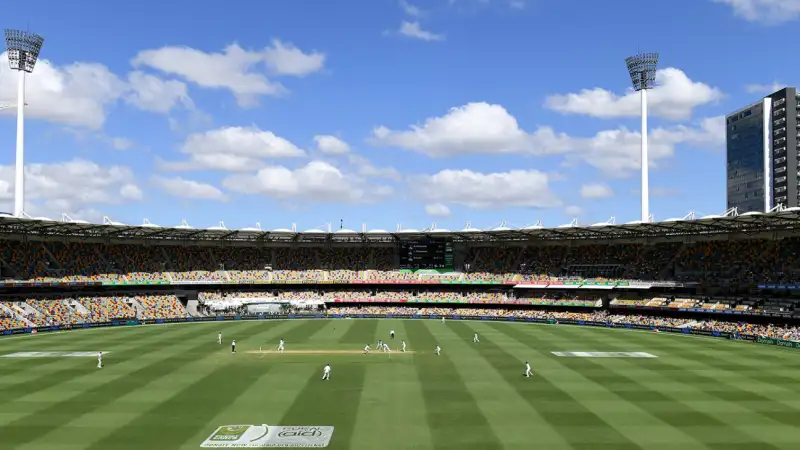
There is a cricket ground in Brisbane where Australia did not lose. Not for thirty-two years. Thirty-one Test matches came and went at the Gabba — touring sides arrived, were softened up on its bounce and beaten, and went home — and through all of it, since a West Indian team in 1988, no visitor had walked off that field a winner. It was not a venue. It was a verdict. Australia opened every home summer there precisely because of what it did to people.
So when this series came down to its final Test, and the ground was the Gabba, the Australians felt the result was effectively decided. Late in the previous match, their captain Tim Paine had said the quiet part into a live stump microphone — half a sledge, half a promise: “I can’t wait to get you to the Gabba, Ash. I’ll tell you what.” Everyone understood it. Get them to the fortress, and the fortress would do the rest.
What he could not have known was the state of the team that would meet him there — or that it would barely be a Test side at all.
To understand how impossible the Gabba was, you cannot start at the Gabba. You have to go back a month, to a pink-ball night in Adelaide, and to the lowest score India had made in ninety years of playing the game.
The floor falls in
For two and a half days in Adelaide, India did not just compete — they led. And then, on the third morning, under lights and a pink ball that hooped around corners, the innings did not so much collapse as evaporate. Australia’s seamers bowled a relentless back-of-a-length spell — Hazlewood 5 for 8, Cummins 4 for 21 — and India lost every wicket in a blur of edges and shouldered arms. Not one batsman reached double figures. Mohammed Shami had his forearm broken by a Cummins delivery and walked off for the last time on the tour. India were bowled out for 36 — the lowest total in their entire history, a number that felt less like a score than a wound.
The verdict was instant and global. This was January 2021 — the game now had a second stadium, the size of the internet, and it filled in minutes. Pundits did not hedge. One in particular, watching from England, said out loud what most were thinking.
“36 all out: Humiliation for India as Australia clinch first Test”
Michael Vaughan✓@MichaelVaughanEarly call … I think Australia will beat India this tour in all formats convincingly … #AUSvIND
Michael Vaughan · @MichaelVaughan · 27 Nov 2020
Michael Vaughan✓@MichaelVaughanTold ya … India are going to get hammered in the Test Series … #AUSvIND #4-0
Michael Vaughan · @MichaelVaughan · 19 Dec 2020
Kohli, who would fly home the next day, could barely speak of it: he called the batting collapse a thing it was “hard to put feelings into words” about. And then it got worse. He had only ever been scheduled for this one Test; he left for the birth of his first child. The team that had just made 36 now had no Kohli, no Shami, and no obvious way back.
And yet, inside the Indian dressing room, there was no shouting. The story of the next month begins with what did not happen in that room. The coach, Ravi Shastri, looked at a side expecting to be flayed and gave them, instead, the strangest possible comfort: “You can’t do worse than that.” No knee-jerk reactions, no inquest. The luck had been bad in one session; the cricket, mostly, had not. Stand-in captain Ajinkya Rahane — a quiet man who had spent years in other men’s shadows — inherited the ruins, and chose to treat 36 not as a verdict but as a floor. There was only one direction left.
A pulse, against the odds
On Boxing Day, in front of an MCG crowd expecting a procession, Rahane did the one thing a caretaker captain is not supposed to do: he led from the front. His 112 — calm, almost serene, threaded through a full day’s batting — was the innings of a man refusing to panic on behalf of an entire panicking nation. Around him, two new faces appeared. A twenty-one-year-old opener named Shubman Gill, unhurried against the fastest attack in the world. And a debutant seamer, Mohammed Siraj.
Siraj should not, by any ordinary measure, have been able to bowl a ball that tour. Weeks earlier, while the squad was sealed inside its quarantine bubble, his father — an auto-rickshaw driver in Hyderabad who had spent his life scraping together the money for his son’s cricket — had died. Siraj could not fly home; the bubble made it impossible, and his return would have ended his tour. His mother told him to stay. Kohli told him to stay strong. So he stayed, and grieved in a hotel room half a world from the funeral, and then walked out at the MCG and bowled like a man with something to prove to someone who could no longer watch.
India won the second Test by eight wickets and squared the series at one apiece. It should have been a turning point. Instead it was the moment the injuries began in earnest — because the price of fighting Australia this hard, on these pitches, was paid in bodies.
The wall of bodies
Sydney was where the series stopped being about cricket and started being about pain. Set an improbable target, India first tried to win it — Rishabh Pant, dropped earlier in the series and batting now like a man freed, counterattacked his way to 97 and brought the impossible briefly into view before falling. And when the win slipped away, the task became simpler and far crueller: survive. Bat out the final day on a worn pitch against Cummins, Hazlewood and Lyon, and do not get out.
They did it on broken bodies. Cheteshwar Pujara absorbed the new ball as he always did. And when the lower order was exposed, two injured men dug in for the last three hours. Hanuma Vihari had torn his hamstring and could barely run between the wickets; he made 23 not out off 161 balls, rooted to his crease because running was no longer an option. At the other end Ravichandran Ashwin, his back in such spasm that he had been unable to pick his daughter up that morning, made 39 not out off 128. Together they faced 256 deliveries and refused to lose. The match was drawn. It felt, to everyone watching, exactly like a victory — and it cost India two more players.
It was in this Test, on the stump mic, that Paine had issued his promise about the Gabba. He was not being cruel so much as stating the obvious. India were running out of cricketers. By the time the team bus left Sydney, the casualty list was no longer a worry — it was the story.
Who are these guys?
Add it up. By the morning of the final Test, India were without Kohli, Shami, Umesh, Rahul, Jadeja, Vihari, Ashwin and — with an abdominal strain that ended his tour — their one genuine fast-bowling spearhead, Jasprit Bumrah. The first-choice side had simply dissolved. What was left had to be assembled from whoever could still hold a bat or run in to bowl.
Put the two team sheets next to each other. On one side, the XI India would have picked at full strength — a generation of the country’s cricket, more than five hundred Tests of it, struck off one name at a time. On the other, the XI that actually walked out: a couple of seasoned batsmen propping up a side filled in with debutants, a man with ten balls of Test cricket, and two uncapped net bowlers who had come to Australia only to give the real players throwdowns.
| Test caps | |
|---|---|
| Rohit Sharma | 33 |
| KL Rahul | 36 |
| Cheteshwar Pujara | 83 |
| Virat Kohli (c) | 86 |
| Ajinkya Rahane | 75 |
| Rishabh Pant (wk) | 15 |
| Ravindra Jadeja | 49 |
| R. Ashwin | 74 |
| Jasprit Bumrah | 14 |
| Mohammed Shami | 49 |
| Umesh Yadav | 46 |
| Test caps | |
|---|---|
| Rohit Sharma | 33 |
| Shubman Gill | 2 |
| Cheteshwar Pujara | 83 |
| Ajinkya Rahane (c) | 75 |
| Mayank Agarwal | 13 |
| Rishabh Pant (wk) | 15 |
| Washington Sundar | 0 |
| Shardul Thakur | 1 |
| Navdeep Saini | 1 |
| Mohammed Siraj | 2 |
| T. Natarajan | 0 |
Look at the bars, not the names. Experience, drawn to scale, simply runs out — and at the bottom of the order, where a Test side keeps its specialist bowlers, it disappears entirely. That is the heart of it. India still had a batting spine in Pujara, Rahane and Rohit. What India did not have was anyone who had ever taken a Test wicket worth speaking of. The attack that was asked to bowl Australia out twice, at the Gabba, had four Test caps between the five of them. The bookmakers had India at long odds simply to compete. That is the team Tim Paine’s fortress was waiting for.
Mohammed Siraj (2 Tests) · Navdeep Saini (1 Test) · Shardul Thakur (10 balls of Test cricket) · Washington Sundar (uncapped — a net bowler) · T. Natarajan (uncapped — a net bowler)
There is a story Rahane has told since, and it is the truest measure of where India stood that morning. On the team bus to the ground, before the first ball of the final Test, the stand-in captain stood up in the aisle and counted heads — actually counted them, one by one — to be sure he had eleven fit men to put on the field. He did. Just barely. That was the side India sent to break a thirty-two-year fortress.
The fortress, up close
Australia batted first and made 369. Marnus Labuschagne ground out a patient 108, and the extraordinary thing — the thing that should have been impossible — was that the net-bowler attack did not wilt. Natarajan, on his Test debut, took three wickets. Thakur took three. Sundar and Siraj chipped in. A bowling group that had no right to contain Australia’s batting kept it to a total that was large but not fatal.
Then came the passage that this whole story turns on, and it is not the famous chase — it is what happened with India’s first innings teetering. India slumped to 186 for 6, the lead ballooning towards 180, the match threatening to slide out of reach before the fifth day ever arrived. To the crease, together, walked the two least likely men in the side: Washington Sundar, uncapped, a net bowler three days ago, and Shardul Thakur, whose entire prior Test career amounted to ten deliveries. Between them, in living memory, they had done nothing at this level. What they did now was bat as though they had always belonged.
For thirty-six overs they would not be moved. They counter-punched — Thakur driving on the up, Sundar playing with the soft hands and straight bat of a man who had faced Australia his whole life — and put on 123 for the seventh wicket: the highest score ever made by a debutant batting at No. 7 in Australia, and India’s highest seventh-wicket stand at the Gabba — past a mark Kapil Dev and Manoj Prabhakar had set three decades earlier. Sundar made 62. Thakur made 67. When Cummins finally broke the stand, the damage was done in reverse: India had clawed all the way to 336, conceding a lead of just 33. Two men who were not supposed to be on the field had turned a probable rout into a level fight. The Gabba, for the first time, felt nervous.
Even India’s greats, watching from home, reached for the same truth the team sheet had told. Virender Sehwag simply did the arithmetic that mattered:
Virender Sehwag✓@virendersehwagToday in Brisbane India concede a lead of 33, when at one stage it looked like they may end up conceding 133. Great effort considering that Australia's 4 bowlers had more than 1000 Test wickets to India's 5 bowlers having 11. Shandar Zabardast
Virender Sehwag · @virendersehwag · 17 Jan 2021
Virat Kohli✓@imVkohliOutstanding application and belief by @Sundarwashi5 and @imShard. This is what test cricket is all about. Washy top composure on debut and tula parat maanla re Thakur!
Virat Kohli · @imVkohli · 17 Jan 2021
And then, in Australia’s second innings, Siraj led — not as a figure of speech, but literally, the senior seamer of a novice attack setting his fields and taking the new ball, the grieving debutant from Hyderabad marshalling a crew of strangers. He had Labuschagne caught at slip off the extra bounce, Wade strangled down the leg side for nought, and then produced the ball of the match: one that reared off a length to have Steve Smith caught for 55.
A ripper from back of a length, leaping at the gloves — taken. Steve Smith gone for 55. A bowler two Tests old has just removed the best batsman in the world.
Starc and Hazlewood followed. Five for 73 — a maiden five-wicket haul, the first by an Indian at the Gabba — with Thakur taking the others. Australia were bowled out for 294. The target was set, and it was the kind of number that the fortress had spent thirty-two years making meaningless: 328 to win, on a fifth-day pitch with a widening crack from which the ball spat and reared.
The chase
India began the final day on 4 without loss, needing 324 more. The honest plan, that morning, was not yet a heist. All three results were alive, and the dressing room was split on which to chase; the assistant coach Vikram Rathour would admit, “we didn’t know how to approach the day actually, because all three results were on.” Shastri wanted intent. The pitch, against every expectation, was playing well. And so two very young men decided, between themselves, to do the unthinkable on a Gabba fifth day: to go for it.
Shubman Gill, twenty-one years old and three Tests into his life, played as if the occasion meant nothing to him. In the nine overs before lunch he and Pujara took 51 off the bowling, Gill attacking Starc with a freedom that visibly rattled the home side — their own analyst later marked that burst as the moment the chase became real. Gill drove and pulled his way to 91, with eight fours and two sixes, and made 328 look, for a glorious session, ordinary. When Lyon finally had him caught at slip, he and Pujara had put on 114, and the impossible had quietly become merely difficult.
What Gill could do with strokes, Pujara did with his body. He made 56 from 211 balls — a strike rate that looks, on paper, like obstruction, and was in fact the most important innings on the card. He stood in front of the short ball and let it hit him: eleven blows, by one count, to his shoulders, his chest, his stomach, his elbows, his unprotected fingers, his helmet. He took the worst of Cummins and Hazlewood from the dangerous end on purpose. “I didn’t want to expose him,” he said afterwards of Gill — he was absorbing the fury so the kid would not have to. He could not sleep that night for the pain. He did not give his wicket away for any of it.
And with the door finally open, India sent in the one man who would not knock politely.
Rishabh Pant, who had come so close at Sydney, walked in to finish what Sydney had started. He and Gill had talked at lunch about exactly this — “playing to win and not for a draw.” Now, as the afternoon wore on and the equation shrank, he played the shots only he would dare: when Lyon dropped slightly straight, Pant skipped down and lofted him over long-on for six, a stroke of pure mischief against the turn.
Pant dances down the pitch and launches it over long-on for six — against the turn, against the situation, against the fortress itself.
He went after Lyon again the next over — consecutive fours, the equation suddenly down to 31 from 39 balls, the draw forgotten on both sides. He added 53 in 55 balls with Sundar, the net bowler now batting to win a Test at the Gabba. Up on the balcony, the senior pros knew to leave him alone; Rohit Sharma waved off any instruction — “don’t say anything to him, let him bat, he’s not going to listen to whatever we say.”
The end was equal parts nerve and chaos. Sundar fell trying to finish it with a reverse sweep, ten runs short. Navdeep Saini, who had pulled a groin earlier in the match and could barely move, padded up and limped out because there was no one fitter to do it. Three to win, Pant told him the only plan that mattered: “run wherever the ball is, just run.” Then Hazlewood overpitched, Pant met it not quite cleanly, and the ball rolled away past mid-off for four. With three wickets in hand and a little over three overs to spare, the chase was complete — 329 for 7 — and the Gabba, the fortress, the verdict, the thing that did not happen, fell for the first time in thirty-two years.
A low full toss, driven down the ground past mid-off for four. 329 for 7. After thirty-two years, the Gabba is breached.
Pant finished 89 not out and was named Player of the Match. In the rooms afterwards, Rohit found him and said the truest thing anyone said all series — a sentence about a twenty-three-year-old who had just changed Indian cricket and did not yet grasp it: “You don’t know what you have done. When you leave cricket, you will realise what you have done.”
| Team and innings | Total |
|---|---|
| AUSTRALIA1st inningsLabuschagne 108 — a net-bowler attack shares the wickets | 369 all out |
| INDIA1st innings · 33 behindSundar 62 & Thakur 67 — a 123-run 7th-wicket stand from two near-debutants | 336 all out |
| AUSTRALIA2nd inningsSiraj 5/73 — leading the attack, his maiden five-for | 294 all out |
| INDIA2nd innings · chasing 328 on the fifth dayGill 91, Pujara 56, Pant 89* — the Gabba falls for the first time in 32 years | 329 for 7 |
What the nobodies made
India had won the Test by three wickets and the series two–one — retaining the Border–Gavaskar Trophy and winning back-to-back series in Australia, something no Asian side had done. Across the four Tests they had been forced to use twenty different players, a number that tells the whole story by itself: this was not a team that won, so much as a production line of replacements that refused to stop the line. And the same internet that had buried them in December came back to mark the turn — including the pundit who had written them off, now writing the opposite.
Michael Vaughan✓@MichaelVaughanThe Greatest Test series win of all time … Well done #India you have just shown the way for England to get back those Ashes back later in the year …
Michael Vaughan · @MichaelVaughan · 19 Jan 2021
Sachin Tendulkar✓@sachin_rtEVERY SESSION WE DISCOVERED A NEW HERO. Every time we got hit, we stayed put & stood taller. We pushed boundaries of belief to play fearless but not careless cricket. Injuries & uncertainties were countered with poise & confidence. One of the greatest series wins! Congrats India.
Sachin Tendulkar · @sachin_rt · 19 Jan 2021
Virat Kohli✓@imVkohliWHAT A WIN!!! Yessssss. To everyone who doubted us after Adelaide, stand up and take notice. Exemplary performance but the grit and determination was the standout for us the whole way. Well done to all the boys and the management. Enjoy this historic feat lads. Cheers @BCCI
Virat Kohli · @imVkohli · 19 Jan 2021
“Indian summer! Gabba streak ends with classic Test win”
“India breach fortress Gabba”
The line about the Gabba — Paine’s “see you at the Gabba” — became one of the most quoted backfired sentences in the sport. And the write-off posts aged into folklore too: years later Pujara, the man who had taken eleven blows to make it happen, would have that 4–0 prediction framed and ask its author to sign it.
The men were remade by it. Siraj, who had buried no one because he could not get home, flew back to India a Test five-for-taker and went straight to his father’s grave. Natarajan, the net bowler, the rickshaw-driver’s son, returned home a Test cricketer. Gill and Pant announced themselves as the spine of the next decade. Pujara’s bruises healed into a kind of folklore. And Rahane, the caretaker who was supposed to keep the seat warm, had instead held a team of strangers together long enough to do the impossible.
This was not a great team winning a Test. It was a stranger, sturdier idea proving true — that a side is more than its eleven best players, and that belief, shared down a dressing room, can outlast almost any amount of bad luck.
That is the durable thing the Gabba proved. A team can lose its stars, its captain, its spearhead and half its first XI — and still find, in its net bowlers and its second-stringers and a grieving young quick from Hyderabad, enough to breach a fortress that had stood for a generation. Depth is not a glamorous word. For one week in Brisbane, it was the most beautiful one in cricket.
- Mohammed SirajThe Grieving Spearhead
An auto-driver's son, two Tests old, who lost his father mid-tour and could not get home to bury him. He stayed.
Led a gutted attack to 5/73 in the decider — his maiden five-for. Visited the grave straight after the tour.
- T. NatarajanDebutThe Net Bowler
Came to Australia only to bowl in the nets. Had, by one account, never properly batted in a match.
Made his Test debut at the Gabba and took 3/78. A rickshaw-driver's son, suddenly a Test cricketer.
- Washington SundarDebutThe Other Net Bowler
Uncapped, carried as a spare spinner, barely expected to play.
Debuted, made 62, and added 123 with Thakur — the stand that rescued the first innings.
- Shardul ThakurTen Balls
Had bowled all of ten deliveries in Test cricket — broke down injured on debut two years earlier.
Made 67, took seven wickets in the match, and held the catch that sealed Siraj's five-for.
- Navdeep SainiThe One Who Broke Down
One Test old, into a side with nothing left to spare.
Pulled a groin mid-match — and still walked out to bat at the death, with ten runs left to win.
- Cheteshwar PujaraThe Shield
The immovable No. 3, asked to take the new ball's fury so the kids could survive.
Took eleven blows to the body for 56 off 211 — and would not move, so Cummins could not get to Gill.
- Shubman GillThe Kid
Twenty-one years old, two Tests old, opening the chase against Cummins, Starc and Hazlewood.
Made 91 and, for a session, made 328 look ordinary.
- Rishabh PantThe Finisher
Dropped earlier in the series; his Sydney 97 had fallen agonisingly short of the win.
Walked in with it in the balance and made 89 not out to win it. Player of the Match.
- Ajinkya RahaneThe Caretaker
Handed a leaderless, humiliated side after the 36 and Kohli's departure.
A century at Melbourne, then held a team of strangers together long enough to make history.