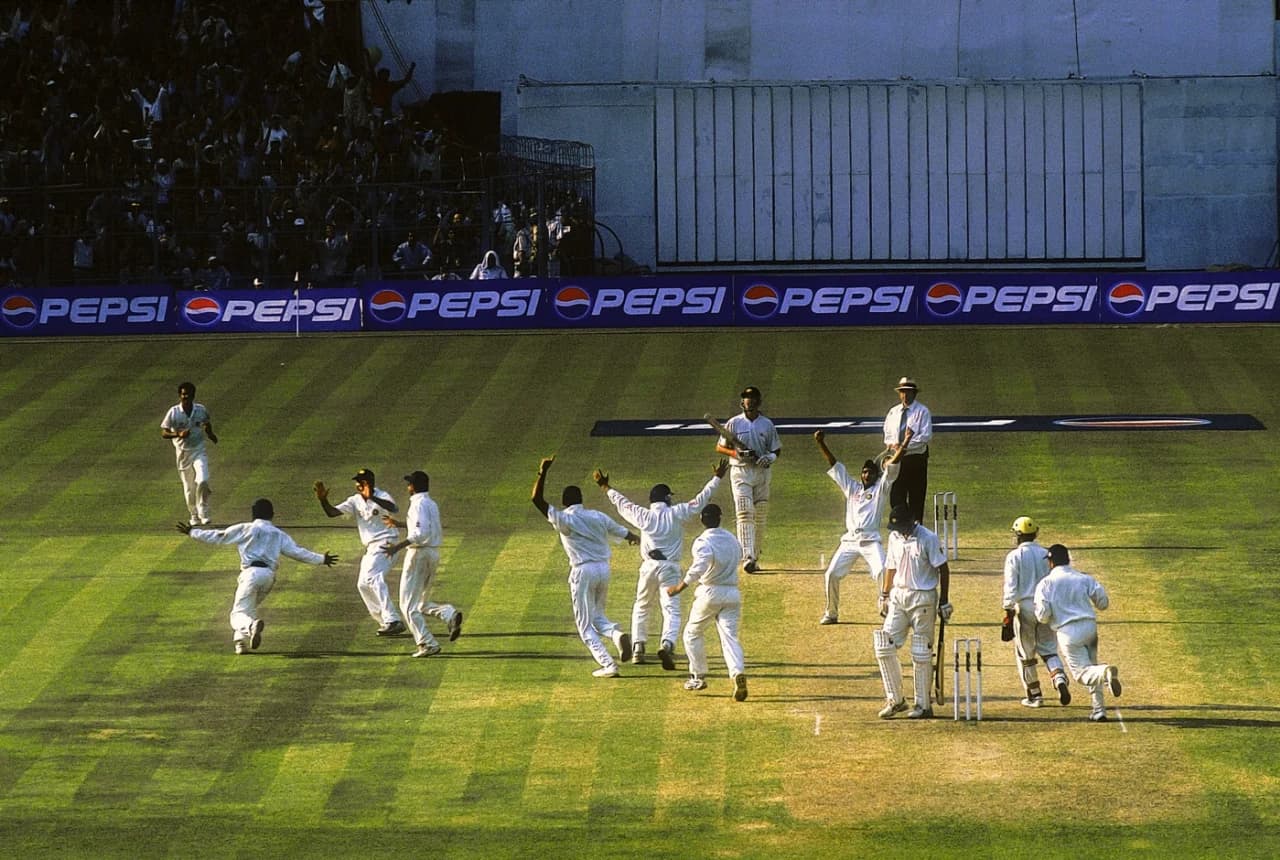
India v Australia
For sixteen months, the best team in the history of cricket did not lose a Test match. Not a single one. Sixteen in a row, on every kind of pitch, in every corner of the earth — a record no side had built in a hundred and twenty-four years of the game. Steve Waugh’s Australians did not just beat teams. They dismantled the idea that they could be beaten.
They came to India for the one thing they had never won. And in the second Test of that tour, on a hot, cracked stretch of Calcutta clay, they did everything a great team is supposed to do. They piled up 445. They bowled India out for 171. They had the home side beaten and humiliated, 274 runs behind, and — because they were Australia, and Australia did not show mercy — they sent them straight back in to do it all again.
What happened over the next two days had occurred only twice in the entire history of Test cricket. It has happened only once since.
A team forced to follow on — a team that should have lost inside four days — won. Two batsmen who walked out with their careers in question batted, between them, for almost two full days without being parted. A twenty-year-old with a borrowed place and a buried father took thirteen wickets. And on the fifth evening, the unbeatable team was bowled out, and the greatest winning streak the sport had ever seen died at the number sixteen, where it still stands today.
That evening, grown men wept in the streets of Calcutta. Strangers embraced on rooftops. A country that had spent a year ashamed of its own game suddenly remembered why it loved it.
But to understand how impossible this was, you have to go back three weeks — to a team that could not lose, and a country that had forgotten how to believe.
A team that could not lose, a country that could not hope
Begin with the Australians, because everyone else did. Sixteen straight wins. They did not lose sessions, let alone matches. They batted with violence and bowled with precision and fielded like men who found dropped catches personally offensive. Glenn McGrath would put the ball on a length the size of a coin, over after over, until something broke. Shane Warne would do the rest. And when, very occasionally, a tail-ender dug in, Steve Waugh would simply find a way — he always found a way — because that was the whole point of him.
One thing was missing. Australia had not won a Test series in India since 1969. Spin, heat, crowds, the slow death of a subcontinental fifth day — it was the one frontier their empire had never crossed, and Waugh, thirty-five now and counting tours the way other men count birthdays, had given the absence a name. The Final Frontier. He said it out loud, to reporters, on the record. It was half a goal and half a dare, and everyone in both dressing rooms had heard it.
Now turn to India, who were carrying something far heavier than a losing record. One year earlier, the match-fixing scandal had torn the sport open from the inside. Hansie Cronje confessing. A CBI investigation. And then, in December 2000, the unthinkable: Mohammad Azharuddin — a former India captain, ninety-nine Tests, a national idol — banned from cricket for life. A decade of cherished memories turned suddenly suspect. An entire public sat staring at the game it had loved without conditions, wondering how much of it had been theatre, how many of those famous nights had been bought.
Out of that wreckage came two men. Sourav Ganguly, the new captain — a Bengali aristocrat with a chip on his shoulder and a gift for getting under Australian skin, a man who would keep Waugh waiting at the coin toss just to watch him stew. And John Wright, a quiet, rumpled New Zealander, India’s first foreign coach, who believed this group of players was far better than its bruised, frightened, scandal-haunted reputation. Together they were trying to build a side that would not flinch. They had not finished building it.
The series opened in Mumbai, and the script held to the letter. Australia won inside three days, by ten wickets. Win number sixteen. The caravan moved east to Calcutta, to Eden Gardens — the great roaring concrete bowl that could hold a hundred thousand souls and amplify whatever it was given, joy or fury, into something close to weather. India arrived there without their best bowler, Anil Kumble, whose shoulder had given out, and handed his enormous burden to a twenty-year-old off-spinner with a suspect-action inquiry hanging over him and his father six months in the grave. Nobody outside the home dressing room gave India a prayer. Inside it, in honest moments, the odds did not feel much better.
The trap closes
Waugh won the toss — Ganguly, true to himself, sauntered out late for it — and chose to bat, because of course he did. Matthew Hayden had spent the whole tour reinventing himself, a big Queenslander dropping to one knee and sweeping India’s spinners clean off their lengths, turning their greatest weapon into a liability. He did it again now: 97, brutal and utterly premeditated. Australia cruised to 193 for 1, and Eden Gardens, the loudest place in world cricket, fell as quiet as a library. The trap was being laid, and everyone could feel it.
Then Ganguly tossed the ball to the kid. And the afternoon turned inside out.
Harbhajan Singh had bowled with fire all day, and now he found something more. He beat Ricky Ponting — Australia’s heir apparent, helpless against spin in these conditions — with a quicker one, and pinned him lbw. Next ball, Adam Gilchrist, the most destructive number seven the game had ever produced, shuffled across his stumps and was given lbw first ball — the ball, replays would whisper, pitching a fraction outside leg, the luck of a man whose day had come. And now the hat-trick ball, and Shane Warne on strike, and a hundred thousand people on their feet.
Here is the thing nobody tells you: Harbhajan was not thinking about history. He was thinking that Warne, like everyone in that era, would shove his pad at anything full to kill the lbw. So he bowled it full and straight. Warne, caught between bat and pad, flicked it — off the bat, not the pad — and at short leg Sadagoppan Ramesh flung himself low and held it, the catch of his life. The umpire’s finger went up. The first hat-trick by an Indian in the history of Test cricket — ninety years of waiting — settled in three deliveries by a boy who, a few months before, had been close to giving up the game and flying to America to drive trucks for a living.
Slow down on that boy for a moment, because it matters for everything that follows. His father had died the previous year; he was the eldest son, suddenly responsible for his mother and five sisters, and the money in cricket was not coming. He had been reported for a suspect bowling action and dropped, his confidence in pieces. He was only standing on this ground at all because Kumble’s shoulder had failed at exactly the right moment. Twenty years old, with nothing to lose and everyone he loved to play for — and he had just bowled the most famous over of his life.
But this was still Australia, and Australia did not fold. From 252 for 7 — and then 269 for 8, the trap apparently sprung — Steve Waugh did the most Steve Waugh thing imaginable. With Jason Gillespie, a fast bowler with the soul of a nightwatchman, blocking as though paid by the hour, Waugh farmed the strike, refused every risk, and stitched together 133 runs for the ninth wicket. He reached his hundred — 110 in the end, his twenty-fifth, passing Tendulkar that day — and tugged at the famous red rag in his pocket, and the whole ground, even an enemy ground, stood to applaud a great fighter. Australia 445. The hat-trick was already fine print.
India’s reply lasted 58 overs and felt shorter. McGrath was murderous — 4 for 18 in a spell of pure suffocation, length and patience and not one loose ball to breathe on. The top order fell in single figures. Tendulkar made ten. At 128 for 8 the great stadium was watching a funeral, silent and embarrassed. Only V.V.S. Laxman, dropped down to number six and batting as if on a different, kinder pitch in a different, kinder country, made anything at all — 59 runs of silk and insolence, last man out. India 171 all out, 274 behind. And nobody quite noticed, in the gloom of it, that the most beautiful batting of the day had come from the man everyone had half-forgotten.
Now the decision. 274 ahead, Waugh could bat again and grind India into dust under a lead of four hundred and fifty, or he could enforce the follow-on and try to finish it there and then. He gathered his bowlers. McGrath, who had bowled his heart out in the heat, admitted he was weary. But Waugh did not want a lead. He wanted the kill — he wanted win number seventeen, and the Frontier, and he wanted them now, this match, before this fragile Indian side could remember how to stand up. He had a team that never lost. Why on earth would he give them a second life by being cautious? He enforced the follow-on without a flicker of doubt.
It was, on every piece of evidence available to him, the correct and ruthless call. No team had won a Test after following on in twenty years. It had happened twice in the entire history of the sport. Waugh knew the numbers. He sent India back in. Everyone in the ground had seen this film before, and it ended seventeen.
In the Australian rooms the certainty was total. They drifted about between sessions imagining the celebration to come — the seventeenth win, the series, the songs they would sing, True Blue and Khe Sanh. Under Steve Waugh’s chair, set aside for the evening they would finish it, sat a bottle of Southern Comfort, waiting. Remember the bottle.
The day the wickets stopped falling
In the ten minutes between innings, drained and 274 behind, Wright and Ganguly made the decision a generation of Indian cricket would rest upon. They had watched Laxman bat with the tail and seen something the scorecard hadn’t: that he, alone among them, looked like the pitch held no fear. So they tore up the order. Laxman would bat at three. And Rahul Dravid — the incumbent number three, the Wall, but out of form, out of runs, out of arguments — would be pushed down to six to make room.
Think about what that asked of Dravid. He was the most correct, most proud, most diligent batsman in the side, in the worst trot of his career, with the whispers already circling that the Wall had developed cracks. And his own captain was now telling him, in front of everyone, to step aside for a teammate. He could have sulked. He could have argued his corner; he had every right to. Instead he simply nodded and picked up his gear and said nothing at all. Remember that he said nothing. It is the quietest heroic act in this whole story, and it made everything else possible.
And remember, too, what Laxman was hiding. Three days before the match, six or seven minutes into a net session, his back had seized. That night the physio, Andrew Leipus, asked him to take off his shirt and stared — and in the mirror Laxman saw his own upper body listing away to the left, as though it had quietly decided to belong to someone else. A disc had slipped. “Tell me you can fix this, Andrew,” he kept saying, more insistent each time, until he tasted salt and realised he had started to cry. Leipus would not promise him anything. John Wright told him to play regardless, at sixty per cent if sixty per cent was all there was. So the man now being sent in to save the match, to bat for hours upon hours in furnace heat, was a man whose body was already half-broken before a ball had been bowled at him.
What he carried in against that broken body was a strange, almost eerie calm. In the days between the Mumbai defeat and this one he had travelled to Shirdi to sit before Sai Baba, and then to two more temples in Hyderabad — not to beg for runs, he has always insisted, but to reach for some still point inside himself. He had been raised on the oldest instruction in the Gita: do your duty, but never with your eye on the result, because the only thing a man truly owns is the effort. He walked out at number three with almost nothing in his head — no scoreboard, no deficit, no fear of the man steaming in. Only the next ball, and then the one after that.
It started as a stay of execution, nothing more. 52 for 1. 97 for 2. Then Tendulkar, the one man a nation prayed to, caught for ten again — 115 for 3 — and the maths still read like a sentence handed down: 159 runs behind, more than two full days to bat, McGrath smelling blood with every step. Ganguly fell on the third evening at 232, India still 42 in arrears, and Dravid walked out into the wreckage to join Laxman with the match, by every reasonable measure, already lost.
And then the two of them simply refused to get out.
What follows is best not rushed, because the men who lived it could not rush it either. The fourth day at Eden Gardens is the longest, strangest, most beautiful single day in Indian cricket, and the only honest way to tell it is the way they had to bat it — hour by hour, over by over, with the scoreboard ticking and the wickets column frozen at the same terrible, glorious zero. Watch the numbers move as you read. Watch what does not.
Warne comes around the wicket, into the rough a foot outside leg stump, the angle that has undone better players than these. And Laxman, with wrists that seem to belong to a forger, takes balls spitting out of the footmarks and turns them, against the spin, through midwicket and past mid-on, again and again — strokes that by every coaching manual should not exist. Warne cannot believe it. He has never seen anyone read him this cleanly for this long.
McGrath bowls dry, probing, immaculate, and gets nothing. Gillespie bangs it in short and fast and gets nothing. Waugh rotates through his part-timers like a man turning out his pockets in the dark, looking for a key he is no longer sure he owns. The ball gets old. The sun climbs. Nothing changes.
Even the enemy begins to give it away. As Laxman scrambles a single to reach his hundred, Steve Waugh ambles in from cover and mutters that the young man must be thinking about his endorsements now — a sledge so dry it comes out as a tribute. Behind the stumps Adam Gilchrist, who has no earthly reason to be generous, keeps saying it half under his breath, to no one, to himself: it’s almost like the Don is batting. The best team in the world has started, without quite meaning to, to narrate the man who is beating it.
The heat is the third opponent now, and it is winning against everyone but these two. Dravid is batting through a rising viral fever, grey-faced and cramping, kept upright by something close to a kind lie. When his calf knots and seizes, and Wright bellows from the balcony to get him fit, the physio presses a bright red Vitamin B pill into his hand and tells him it is an anti-cramping tablet. There is no such thing as an anti-cramping tablet. Dravid believes him completely, and bats on. At every interval Laxman’s back locks and the physio lays him flat on the dressing-room floor and works on him until the bell, when he gets up and does it all over again. Neither man will give the Australians the one thing they are now desperate for. A mistake. A chance. A single wicket.
Inside the Indian dressing room, nobody dares move. A superstition has taken hold — the same men in the same seats, no one daring to break the spell by standing up or shifting a thing. Ganguly, the captain, sends out not one message or instruction the whole day; he just sits, he would admit later, and prays. Harbhajan, who will win this match with the ball tomorrow, cannot bear to watch and does not see a single delivery of it. They sit frozen, a whole team holding its breath for an entire day, willing two exhausted men not to fall.
Out in the middle the two of them have nearly stopped speaking in sentences. When one tires, when the timing slips for an over or the head drops, the other is there at the end of the pitch with the same three words that will trail them both for the rest of their lives — job not done. Not advice. Not a plan. Just a hand on the shoulder, and the next ball, and the refusal to let the other one let go.
And the two men do not fall. Laxman passes fifty, then his hundred, and keeps going as though a hundred were merely a place he passed through. He reaches 150. He reaches 200 — and the ground, which on the second evening had watched a funeral, is now a hundred thousand people on their feet and singing. With a single nudged off Hayden he goes past 236, past Sunil Gavaskar, past every Indian who has ever picked up a bat: the highest score his country has ever made.
At the other end Dravid, the demoted man, reaches his own hundred. He turns, for just a moment, to the press box that had spent a month writing his obituary — and holds its gaze, and says nothing, because by now the not-saying is the whole point. Then he settles back down and goes on batting. Australia have been on the field, in that heat, for an entire day, and they have not taken a wicket. The best team on earth, for the first time in two and a half years, does not know what to do.
Stumps on the fourth day: India 589 for 4. Laxman 275 not out. Dravid 155 not out. Three hundred and thirty-five runs added in a single day’s play, for the loss of nobody at all. They came off to a standing ovation and could barely raise their bats to answer it. In the rooms the physio hooked both men to saline drips just to put back what the day had taken — Laxman stretched out on the masseur’s table, Dravid laid on the team’s lunch-table once the plates and cutlery had been cleared away, the two of them too spent to speak, ten and a half hours and three soaked shirts between them.
The Australian huddle broke slowly that evening, and the men walked off with the strange, hollow look of a side that has just felt the ground move under a thing it believed could not move. Somewhere up in the stands, an Australian fan heard Adam Gilchrist call to the away supporters as he came off — half a joke, half a prayer: we are going to need you tomorrow.
The reckoning
The fifth morning ended the spell gently, almost kindly. Laxman went at last for 281 — an innings already being voted into legend while its author was still unbuckling his pads — and Dravid for 180, embraced the whole way off the field. They had batted, between them, for the better part of two days. Ganguly declared at 657 for 7, and the entire arithmetic of the match had been turned upside down: Australia, who three days earlier had India following on, now needed 384 runs in a minimum of 75 overs. Or, said honestly, they needed to survive them.
And being Australia, they did not crouch and survive. They attacked. Slater and Hayden put on 74 inside the first hour, batting like men personally insulted by the suggestion of a draw. At tea it was 166 for 3, Steve Waugh himself at the crease, barely thirty overs left in the match. The draw was sitting right there, parked in the members’ end. Up in the press box, most of the reporters had already written the same intro: brave India fall agonisingly short.
Twenty minutes after tea, the match turned feral.
Harbhajan got Steve Waugh — and the gate, once it cracked, simply tore off its hinges. Ponting fell to him again, a second failure to the same boy he could not begin to read. And then the ball went to Tendulkar — Tendulkar, the batsman, the burden, rolling his innocuous little leg-breaks and off-breaks like a man possessed by his own boyhood backyard. He trapped Gilchrist in front for a second-innings duck, the king pair complete, out first ball both times. He had Hayden, the last wall, playing over a full one and given lbw. He pinned Warne with a leg-break that drifted and spat. Seven Australian wickets fell for 46 runs, and the noise of Eden Gardens stopped being sound and became, simply, weather — a pressure on the chest, a thing you felt in your teeth.
But at twenty-five past six on the fifth evening, Harbhajan Singh — who else — thudded one into Glenn McGrath’s front pad, and umpire S.K. Bansal raised his finger, and Eden Gardens detonated. Australia 212 all out. India had won by 171 runs — the very same 171 they had been bowled out for in the first innings, scraped together in their shame and now handed straight back to Australia as a victory margin, the scoreboard’s own dark sense of poetry. Harbhajan had thirteen wickets in the match. India had become only the third team in the hundred-and-twenty-four-year history of Test cricket to win after being made to follow on. The victim, all three times across all those years, the same: Australia.
| Wkt | Batter | Runs | At | Note |
|---|---|---|---|---|
| 1 | Slater | 42 | 103/1 | the opening stand finally broken |
| 2 | Langer | 58 | 193/2 | Australia humming at nearly 200 for 1 |
| 3 | M. Waugh | 22 | 214/3 | the slide begins |
| 4 | Hayden | 97 | 236/4 | three short of the hundred his sweeping deserved |
| 5 | Ponting | 6 | 252/5 | lbw Harbhajan — hat-trick ball one |
| 6 | Gilchrist | 0 | 252/6 | lbw Harbhajan, first ball — hat-trick ball two |
| 7 | Warne | 0 | 252/7 | bat-pad to Ramesh at short leg — THE HAT-TRICK |
| 8 | Kasprowicz | 7 | 269/8 | Australia eight down, India ascendant |
| 9 | Gillespie | 46 | 402/9 | end of the 133-run ninth-wicket stand |
| 10 | S. Waugh | 110 | 445/10 | last out — Harbhajan's seventh |
| Wkt | Batter | Runs | At | Note |
|---|---|---|---|---|
| 1 | Ramesh | 0 | 0/1 | gone before the scoreboard moved |
| 2 | Das | 20 | 34/2 | McGrath, relentless |
| 3 | Tendulkar | 10 | 48/3 | the great hope, strangled by McGrath |
| 4 | Dravid | 25 | 88/4 | the lean trot continues |
| 5 | Ganguly | 23 | 88/5 | two in two balls of pressure |
| 6 | Mongia | 2 | 92/6 | the lower order exposed |
| 7 | Harbhajan | 4 | 113/7 | no resistance |
| 8 | Zaheer | 1 | 128/8 | eight down, humiliation near |
| 9 | Prasad | 7 | 131/9 | Laxman alone now |
| 10 | Laxman | 59 | 171/10 | last out — 59 of pure touch. India noticed. |
| Wkt | Batter | Runs | At | Note |
|---|---|---|---|---|
| 1 | Ramesh | 30 | 52/1 | a steadier start, the same dread |
| 2 | Das | 39 | 97/2 | still 177 behind |
| 3 | Tendulkar | 10 | 115/3 | ten again — Eden goes very quiet |
| 4 | Ganguly | 48 | 232/4 | day three closes in; India still 42 behind |
| 5 | Laxman | 281 | 608/5 | fifth morning — the spell finally breaks, 376 later |
| 6 | Dravid | 180 | 631/6 | drained, cramping, unbeaten in spirit |
| 7 | Mongia | 4 | 644/7 | swinging for the declaration |
| Wkt | Batter | Runs | At | Note |
|---|---|---|---|---|
| 1 | Slater | 43 | 74/1 | Australia attack the chase — of course they do |
| 2 | Langer | 28 | 106/2 | the spin tightens |
| 3 | M. Waugh | 0 | 116/3 | Harbhajan, gripping and turning |
| 4 | S. Waugh | 24 | 166/4 | the captain falls — the gates open |
| 5 | Ponting | 0 | 166/5 | Harbhajan again. A wretched pair of failures |
| 6 | Hayden | 67 | 167/6 | the last wall — taken by Tendulkar |
| 7 | Gilchrist | 0 | 173/7 | lbw Tendulkar — a pair of ducks |
| 8 | Warne | 3 | 191/8 | lbw Tendulkar, done by the leg-break |
| 9 | Gillespie | 6 | 201/9 | no rescue act this time |
| 10 | McGrath | 12 | 212/10 | lbw Harbhajan. Finger up. Eden detonates. |
What those five days made
The streak died at sixteen, where it stands to this day. A week later in Chennai, in the decider, India won again — by two wickets, Harbhajan finishing the series with thirty-two of them, more than the rest of his attack combined — and the Final Frontier held. Steve Waugh never did conquer it. By the time Australia finally won a series in India, in 2004, he had retired, and the one missing line on the greatest captaincy record of his era stayed missing for good.
That evening the bottle of Southern Comfort under Steve Waugh’s chair was finally opened — not to toast the seventeenth win, but to drown the loss of it. And yet he has never once, he says, regretted enforcing that follow-on. He would have liked to win, of course — but he is at peace with having played the aggressive, front-foot brand of cricket his team believed in, the cricket people came to watch. There is something almost noble in it: the emperor who lost the one battle he wanted most, and refused to pretend afterwards that he would have fought it any other way.
The men were rearranged by those five days. Laxman’s 281 would be voted, again and again, the greatest innings ever played by an Indian, and the initials V.V.S. acquired a permanent, affectionate translation: Very Very Special. Dravid — demoted, doubted, written off — had answered the question so completely that it was simply never asked of him again; the humiliation of the move down to six became the making of him, and the partnership it forced became the spine of Indian batting for a decade. Harbhajan had walked into Eden a nervous replacement and walked out a household name, his father’s son made good in the most public way imaginable.
The smaller, human things stayed with them too. That same night the Indians flew on to Chennai for the decider, still dazed, still not quite believing it — and as they came aboard the plane the other passengers rose to their feet and clapped, and kept clapping, until the sound, Laxman would write, still rang in his ears years afterwards. He has tried many times to explain what carried him through those ten and a half broken hours, and he always arrives back at the same place: when an entire people is willing you on, hoping and praying for you, how can you not walk the extra mile to keep the smiles on their faces?
And a team one year removed from the deepest disgrace in its history — a team that had needed, more than it needed to win, to prove that its sport could still be honest — proved something better and larger than honesty. It proved that the game could still be impossible. That a result everyone in the building had already conceded could still be reached up and seized by two tired men who would not get out.
The game itself flinched. Captains the world over began, quietly, to think twice about the follow-on; Australia, burned at Eden, barely ever enforced it again. One match rewrote a hundred years of reflex. But the deepest change was in the watching — in the millions of Indians in the stands and on the rooftops and crowded around shop-window televisions, who learned in real time, together, that a lost cause is only ever a matter of opinion. The side that grew out of that belief went on to win in places India had never won, for ten years, and every one of those victories carried a faint, permanent watermark: Eden Gardens, March 2001. The week the empire learned it could bleed, and a country learned, again, how to hope.
 Five years in and out of the side, told to open or sit out. He came to Eden batting for his place, his back half-seized. He left it having played the greatest innings an Indian ever has.V.V.S. LaxmanThe Artist
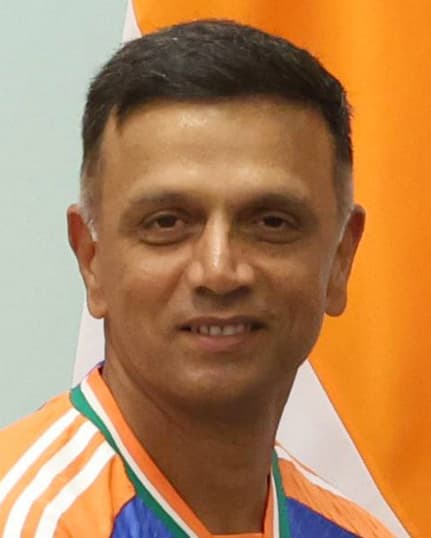 Demoted from his own No.3 to make room for Laxman, in the leanest run of his career, with a viral fever climbing. There were whispers the Wall had cracks. He answered with 180 and never argued once.Rahul DravidThe Wall, demoted
 A billion expectations on a team crawling out of the match-fixing scandal. He failed twice with the bat at Eden — and then won the match in a single spell with the ball.Sachin TendulkarThe Burden
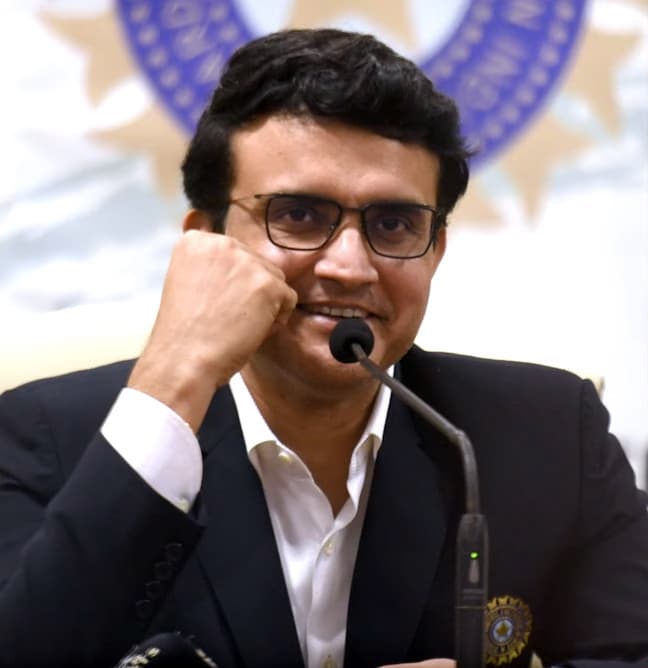 A new captain of a side gutted by scandal. He picked fights with Australia on principle and made Steve Waugh wait at the toss. He was building a team that would not blink.Sourav GangulyThe Agitator
 Twenty years old. Reported for a suspect action, dropped, his father buried within the year. He had half-decided to leave for America and drive trucks. He was only in the team because Kumble's shoulder gave out.Harbhajan SinghThe Kid
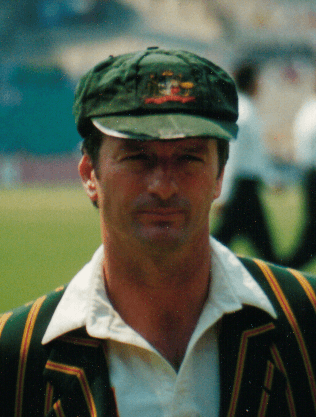 Captain of the best team on earth, sixteen straight wins behind him. He had named the one missing conquest the Final Frontier. At thirty-five, this tour was his last real shot at it.Steve WaughThe Emperor
 The metronome. His 4 for 18 in India's first innings was a thesis statement: on any surface, anywhere, he could strangle a batting order to death.Glenn McGrathThe Metronome
 The greatest leg-spinner alive — and quietly haunted by India, where they read him off the hand. Eden 2001 deepened the scar.Shane WarneThe Magician
 The most dangerous No.7 in the history of the game. At Eden, a pair of ducks — lbw, then bowled by a part-timer. Out first ball in both innings.Adam GilchristThe Hurricane
 Australia's next great batsman, except in India. What Harbhajan did to him here became a career-long subplot, a pair of failures to a boy he could not pick.Ricky PontingThe Heir
 He reinvented himself on this tour, sweeping India's spinners off their lengths. 97 and 67 at Eden — and not one of his teammates could follow him.Matthew HaydenThe Reinvention
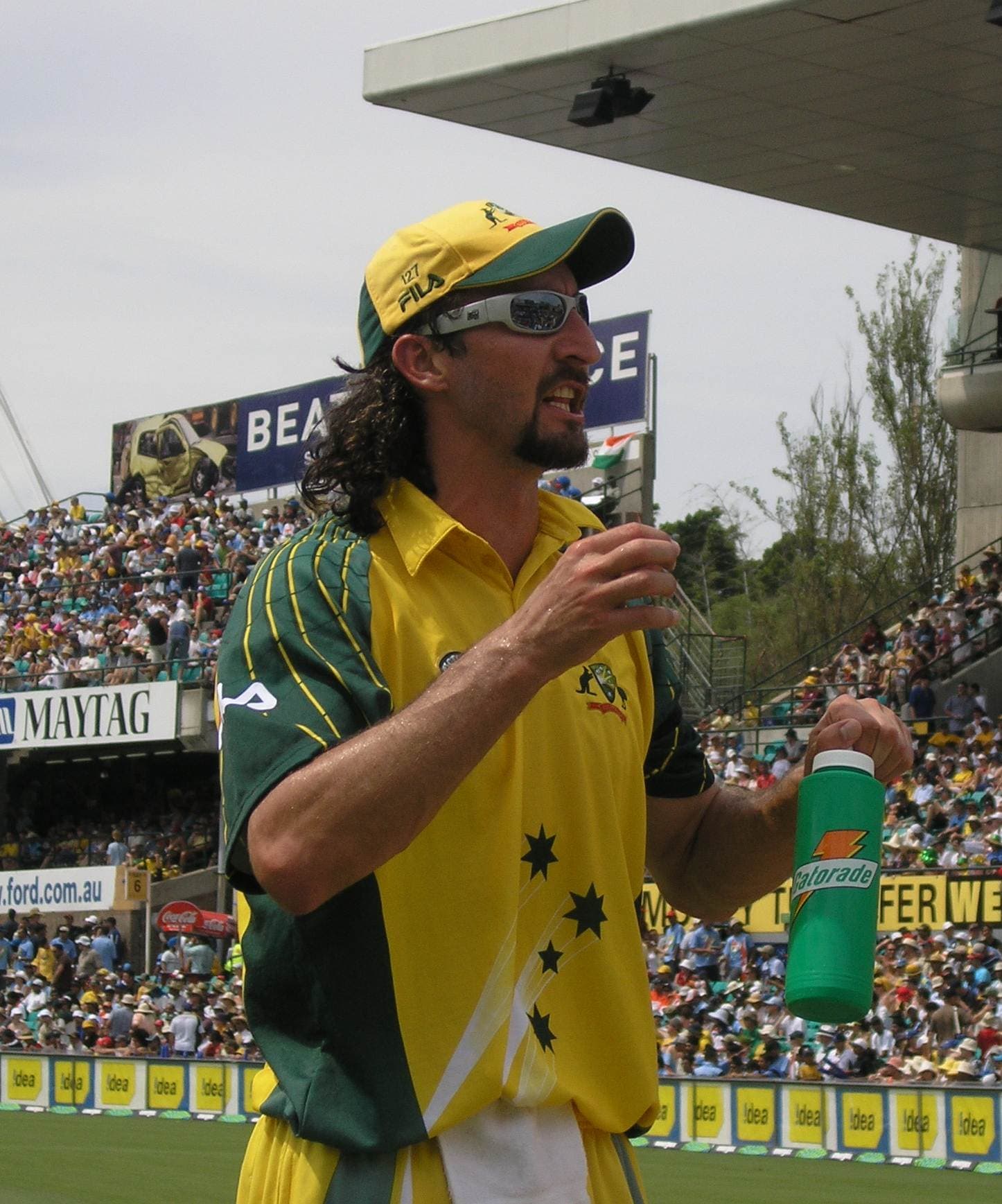 A fast bowler with a nightwatchman's soul. His 46, in a 133-run ninth-wicket stand with Waugh, turned a good total into a fortress — and very nearly into a coffin for India.Jason GillespieThe Sentry
Hover or focus a face to read what he was carrying.